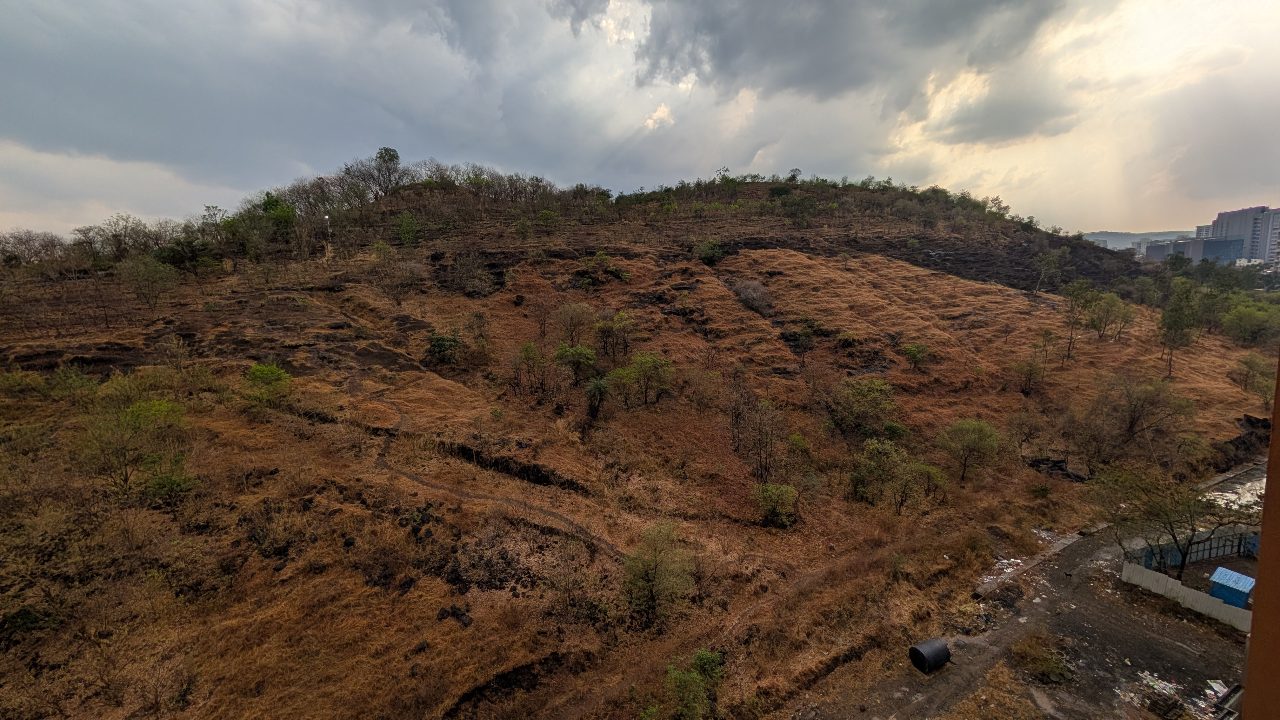
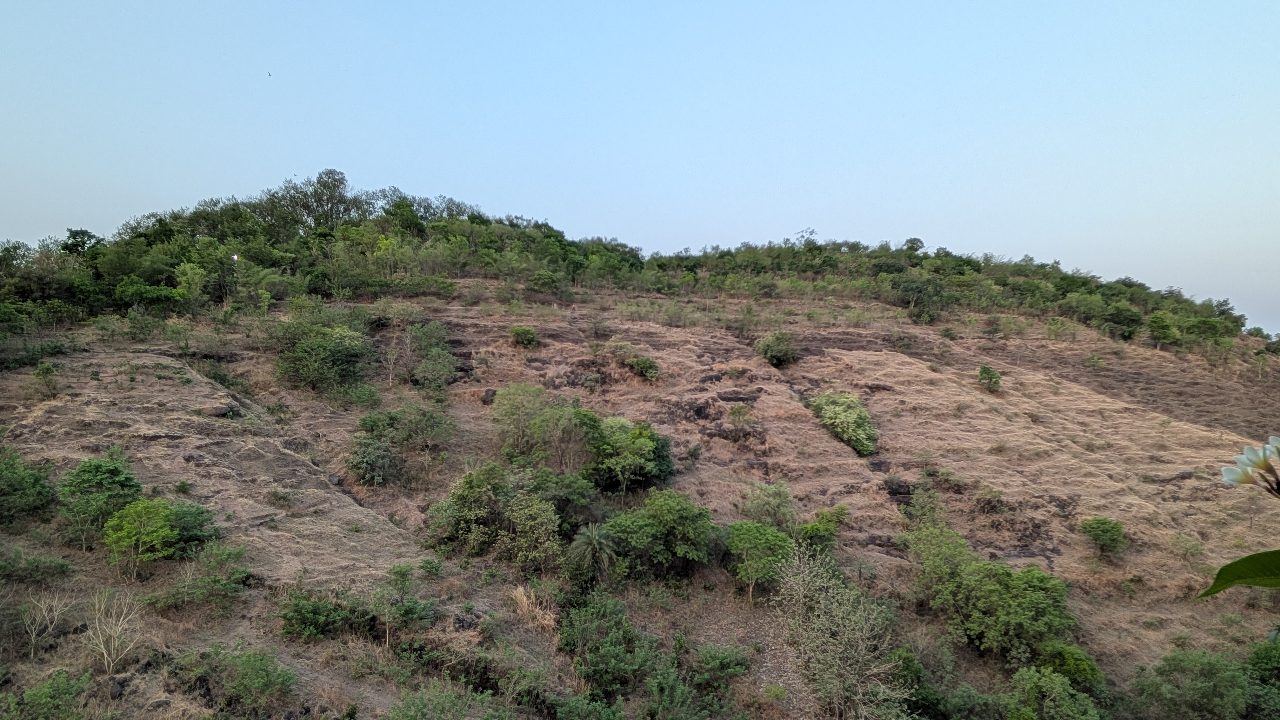
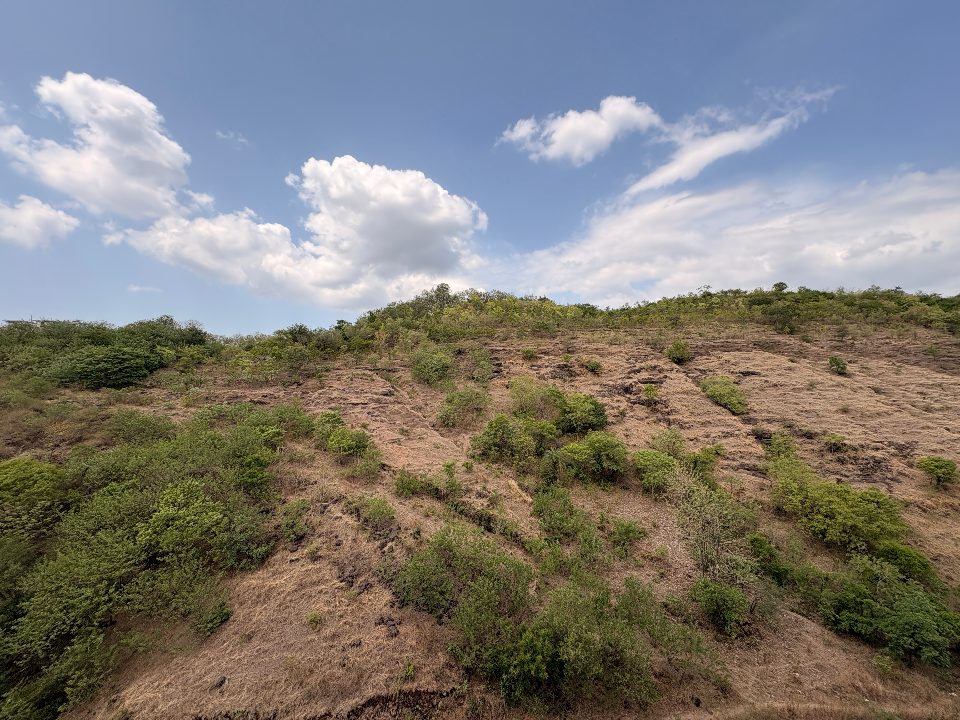
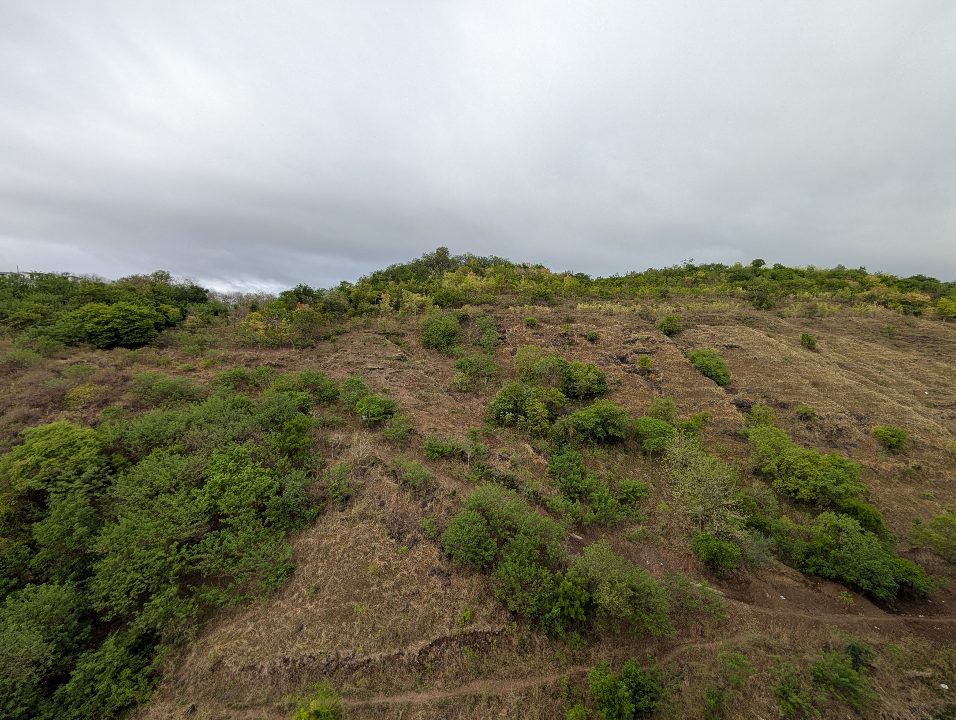
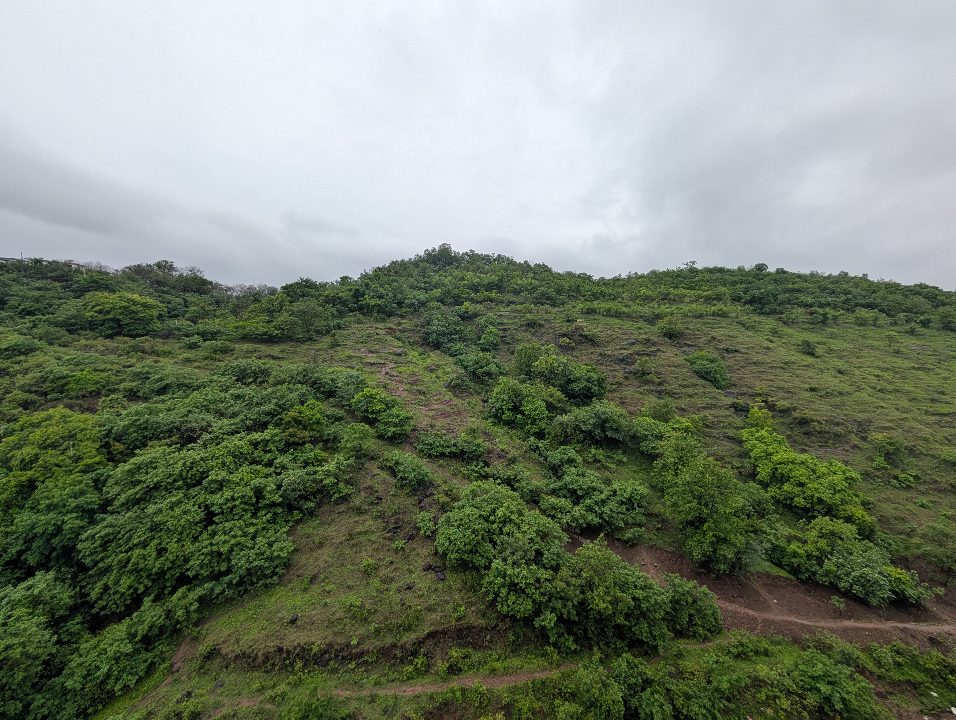
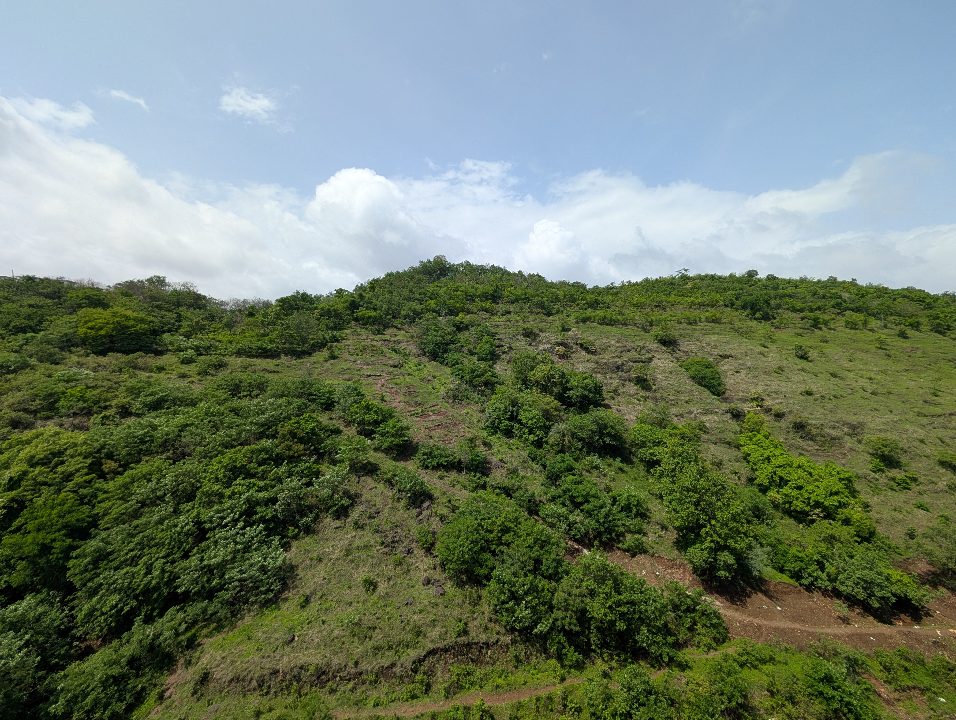
After a short break following our last activity on 19 July, three of us were back on the hill.
The monsoon had been generous over the past fortnight, and as we climbed towards our restoration site, there was a quiet sense of anticipation.
Whenever you leave a newly planted landscape for a couple of weeks, one question stays with you.
"How are the trees doing?"
Thankfully, the hill greeted us with some wonderful news.
Several of the saplings that had been rescued and transplanted during the weekend of 18-19 July had begun putting out fresh leaves and tender new shoots.
It was difficult not to smile.
These tiny signs of new growth meant the plants were beginning to settle into the homes we had created for them. After weeks of digging, planting and watering, seeing fresh green leaves emerge felt like the hill quietly saying, "They're going to be alright."
Of course, nature rarely tells only one story.
While many plants were doing well, we also found that three of the Banyan saplings had lost their leaves after being grazed by goats and sheep.
It was a gentle reminder that we share this landscape with many other species.
What we see as a restoration site is also a grazing ground for local livestock.
Rather than becoming discouraged, we simply added another lesson to our growing list. Restoration isn't only about planting trees. It's also about understanding the many pressures they face and adapting as we learn.
Alongside inspecting the plantation, we spent the morning reinforcing three contour trenches, two of which had weakened after the recent heavy rains. Small repairs like these ensure the trenches continue slowing rainwater, allowing it to soak into the ground instead of rushing downhill.
Every monsoon teaches us something new about how water behaves on this hillside.
The hill also rewarded us with a splash of colour.
Large patches of Lantana camara were in full bloom, covering parts of the slope with their bright flowers.
Although undeniably beautiful, Lantana tells a more complicated story.
Originally introduced to India during the colonial period, it is now recognised as one of the country's most widespread invasive plant species. It spreads rapidly, often out-competing native vegetation and making natural regeneration more difficult in many ecosystems.

Interestingly, not every landscape responds in exactly the same way. Some studies from the Western Ghats have reported limited impacts on certain native plant indicators, while many others have documented significant ecological effects. Like much of nature, the answer is rarely simple.
Among the Lantana, we were delighted to spot something that truly belongs here.
The delicate blue flowers of Cyanotis arachnoidea quietly dotted the hillside.
Unlike the invasive Lantana, this small native herb is part of the hill's original biodiversity. It reminded us that even on a landscape still recovering, native plants continue to find ways to thrive.

As we walked back that morning, the hill seemed to offer a balanced lesson.
Not every tree survives. Not every trench remains perfect. Not every plant belongs.
But every visit teaches us something new.
And perhaps that willingness to keep learning is just as important as every tree we plant.


Satellite NDVI timelapse — 5 years × 6 same-month snapshots — will appear here, powered by Planet Labs imagery, showing how Baner Hill's vegetation has changed season by season.