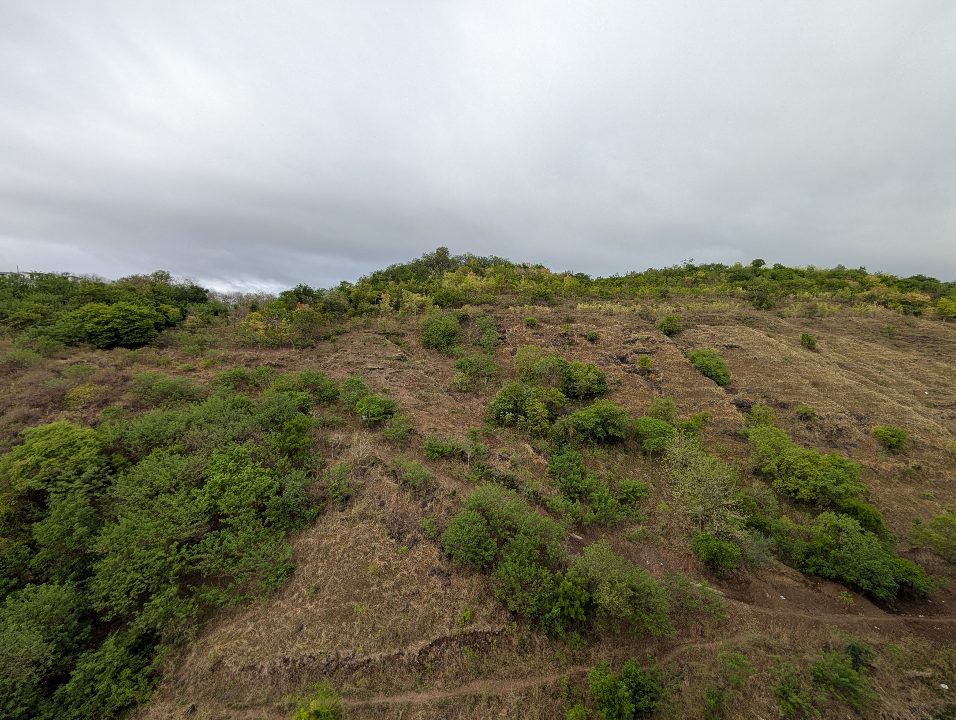
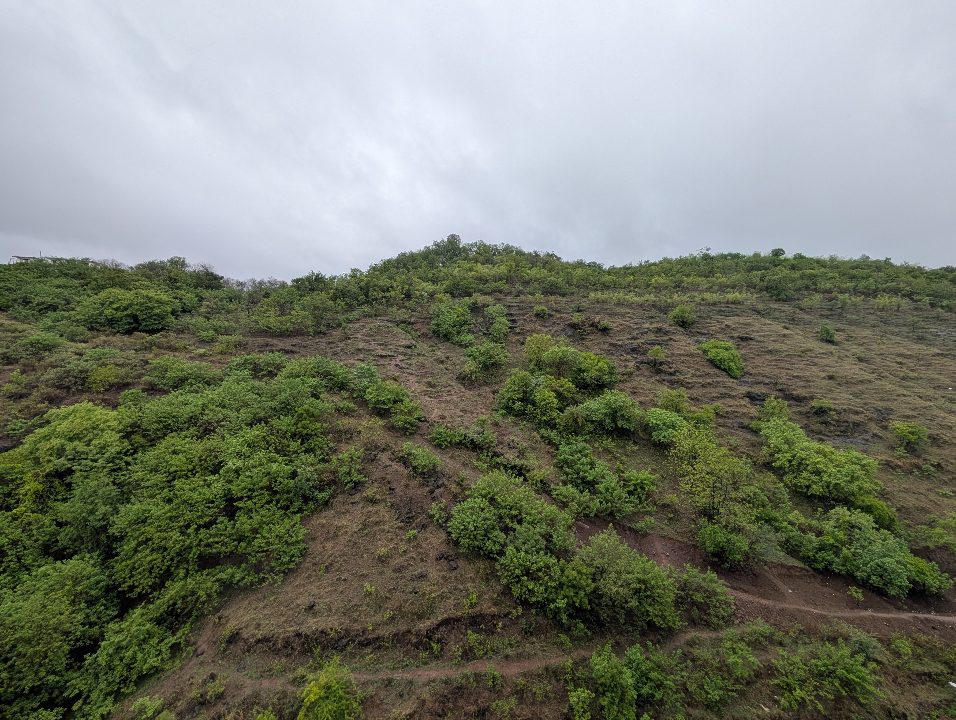
Some mornings stay with you forever.
This was one of them.
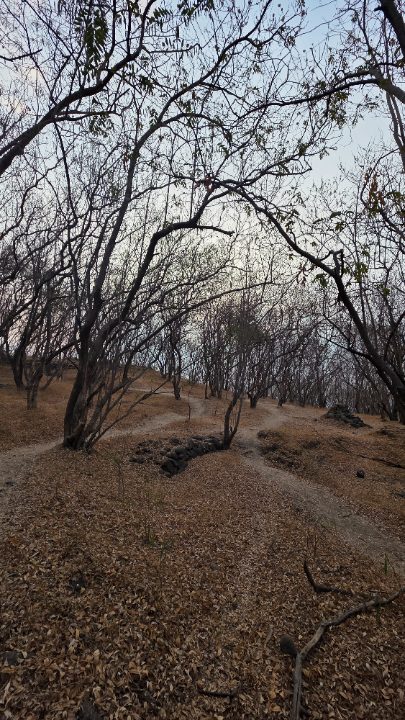
For the past month, our weekends have been spent digging trenches, breaking rock, preparing planting pits and learning from those who have been restoring Baner Hill for years.
Today, for the first time, those preparations turned into something living.
Today, 23 native trees found a new home on Baner Hill.
There were 11 volunteers on the hill this morning, including four members from the Vrindavan initiative, who generously joined us to guide the plantation, share their experience and help ensure every sapling was planted correctly.
Together, we planted 13 Karanj (Pongamia pinnata) and 10 Parijaat (Nyctanthes arbor-tristis) saplings.
One reason these species were chosen is that they are generally not preferred by grazing goats, giving the young trees a better chance of surviving during their early years on the hill.
Alongside the plantation, we also dug two new trenches, reactivated two older trenches, and gave two existing trees, one Neem and one Karanj, a new lease of life by improving the soil around them and strengthening their rainwater catchments.
Then came a moment that words struggle to capture.
As the very first sapling was lowered into the ground, many of us found ourselves unexpectedly emotional.
 Our Very First plant, Planted by Mr. Shashikant Mohite
Over the past month, we had invested countless hours of hard work without seeing anything visible in return. The trenches, pits and planning all felt worthwhile the moment that first young tree stood upright in the soil.
For some of us, there were tears.
Not because the work was over.
But because it had finally begun.
Almost as if the hill wanted to celebrate with us, gentle rain continued through the morning.
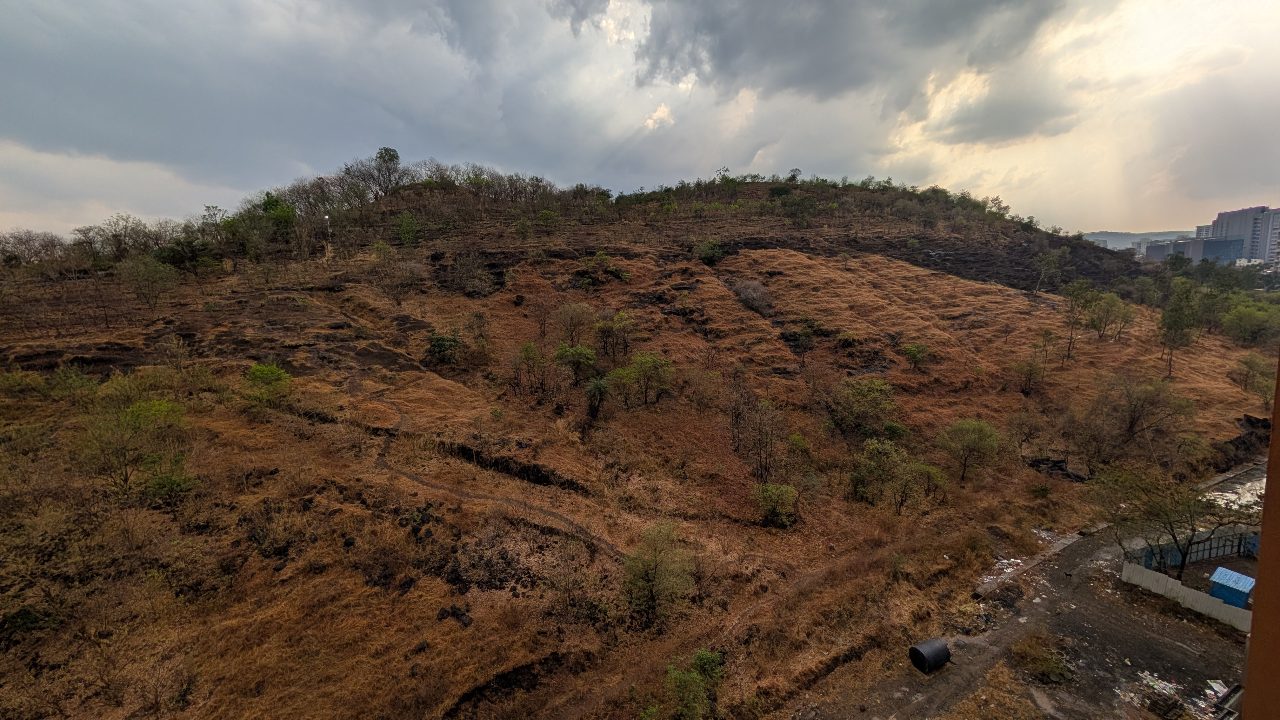
Before long, we watched the trenches we had dug over the previous weeks begin to collect rainwater exactly as they had been designed to.
It was a deeply satisfying moment.
For weeks we had trusted that these simple earthworks would slow the rain and allow it to soak into the ground.
Today, we watched that happen with our own eyes.


Among the many lessons we've learnt from the Vrindavan team, one continues to guide us. Planting a tree is only a small part of restoration.
The real work begins afterwards.
Over the coming months, these 23 saplings will need care, attention and, once the monsoon ends, regular watering until they are established. Their survival will depend far more on consistency than on today's plantation.
In many ways, today was not the finish line. It was simply the day we accepted responsibility for twenty-three young lives.
Our heartfelt thanks to Mr. Rajesh Uttarwar from the Vrindavan initiative for providing the saplings, technical guidance and on-ground support throughout the plantation.
We are equally grateful to Mr. Shashikant Mohite for his constant encouragement, practical advice and tireless effort alongside all the volunteers.
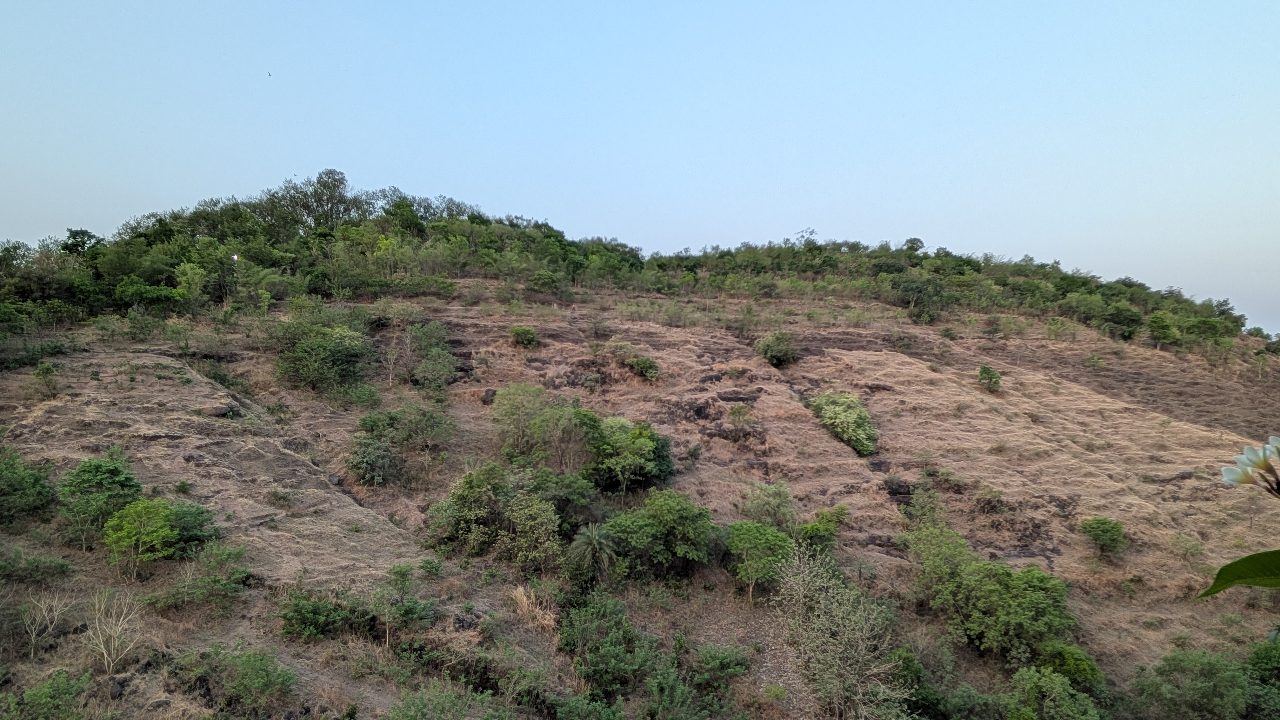
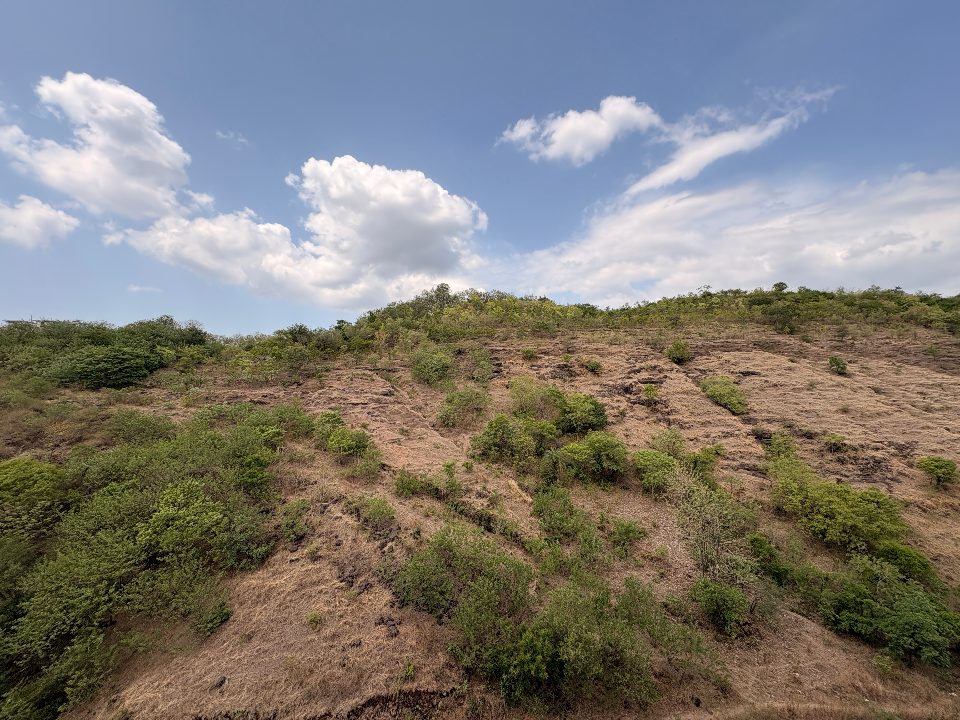
As we walked back down the hill that morning, the landscape looked almost unchanged.
Twenty-three tiny saplings are easy to miss on a hillside this large.
But we know they're there.
And hopefully, many years from now, others will walk through their shade without ever knowing how their journey began.
Update: 6 July 2026
The very next day, Baner Hill received approximately 118 mm of rainfall in a single day. We made a quick visit to inspect the plantation and were relieved to find that the newly planted saplings and the contour trenches had held up remarkably well. It was an encouraging start to what we hope will be their first successful monsoon.
Satellite NDVI timelapse — 5 years × 6 same-month snapshots — will appear here, powered by Planet Labs imagery, showing how Baner Hill's vegetation has changed season by season.