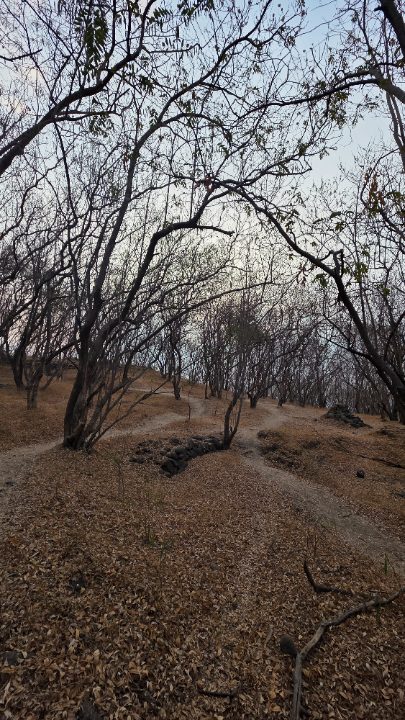
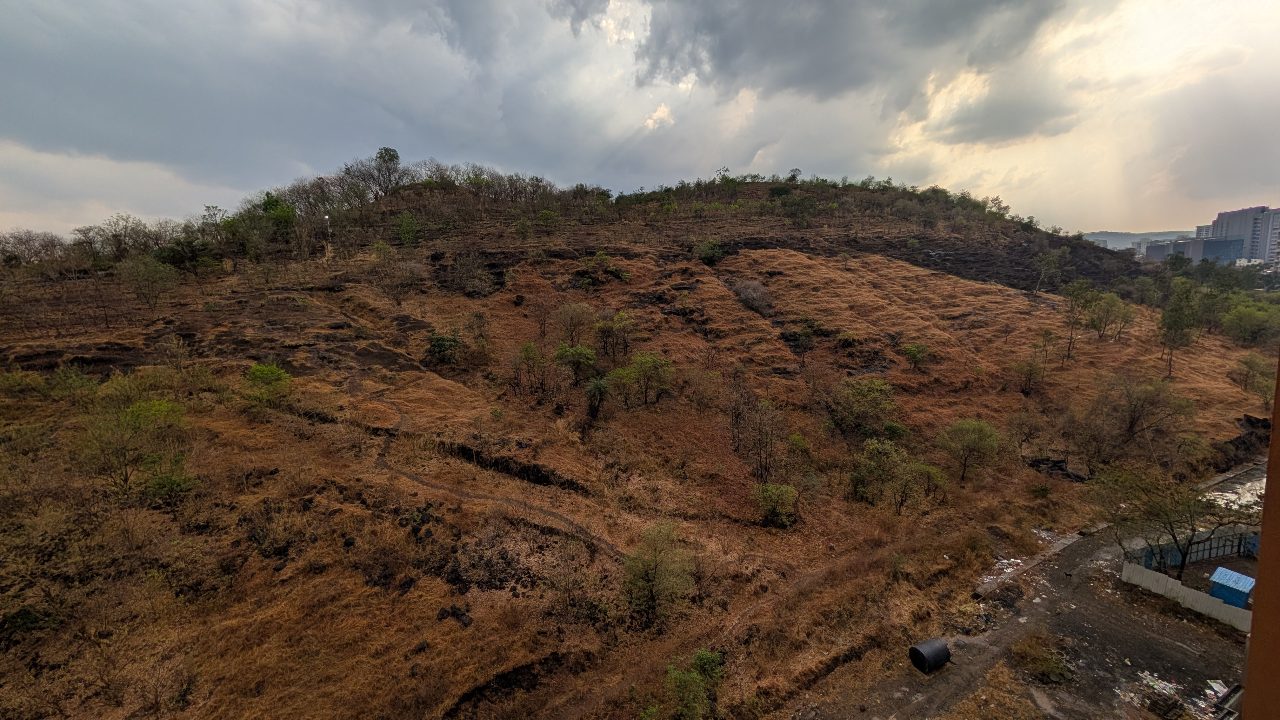
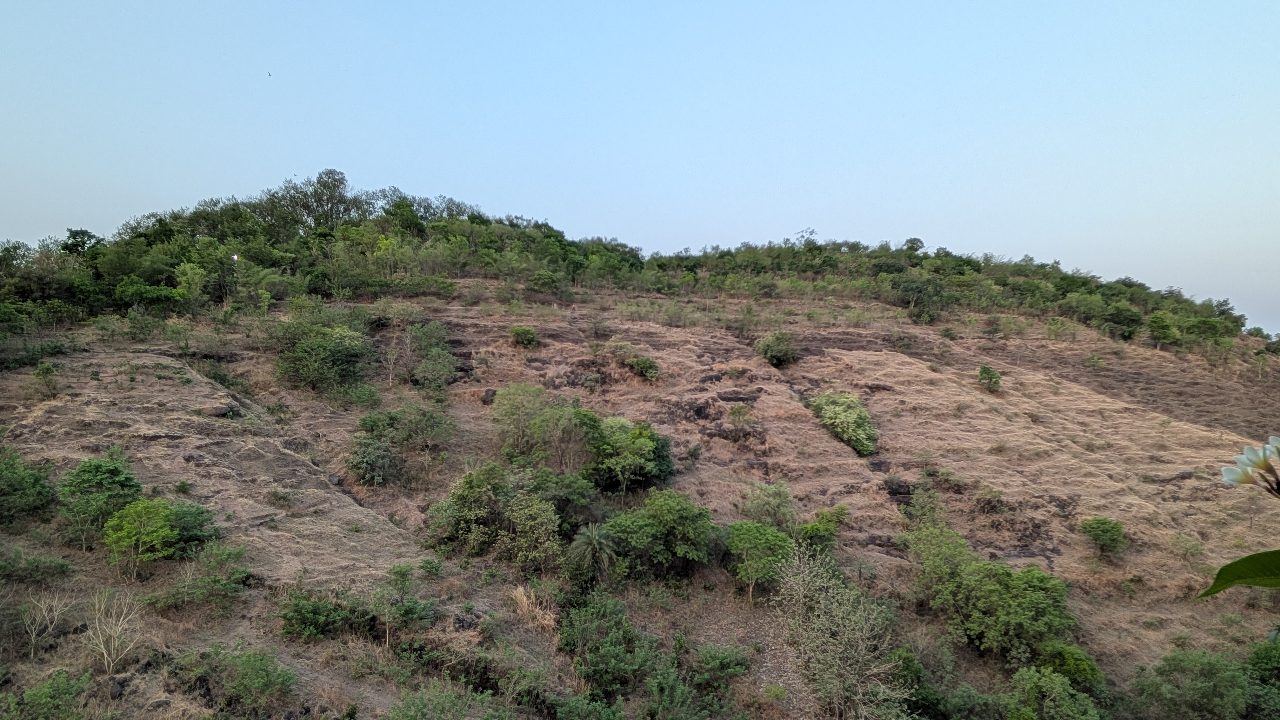
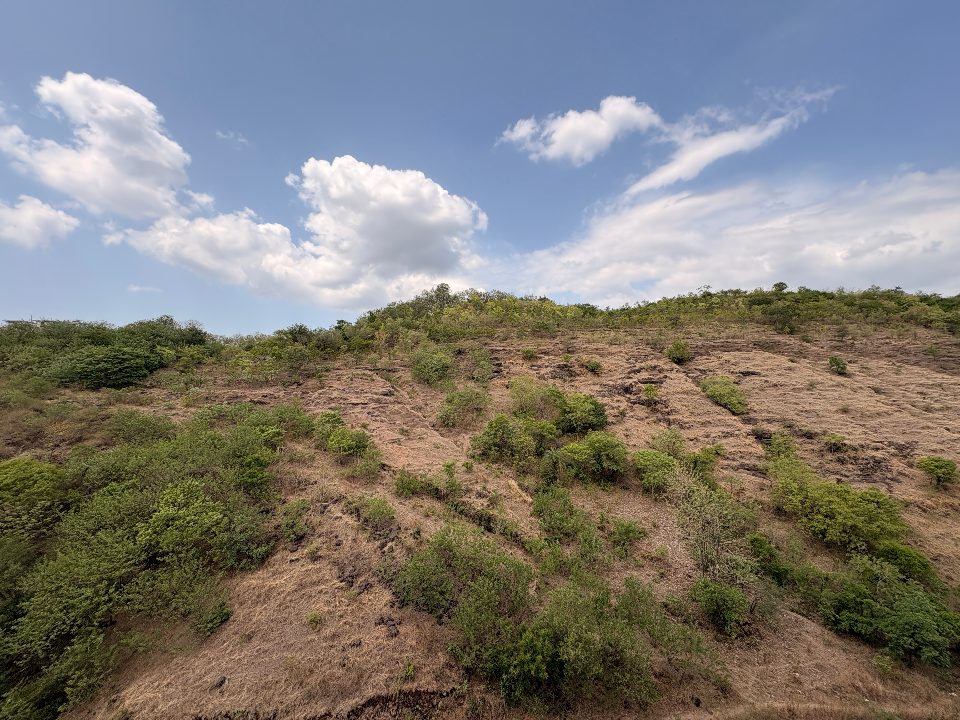
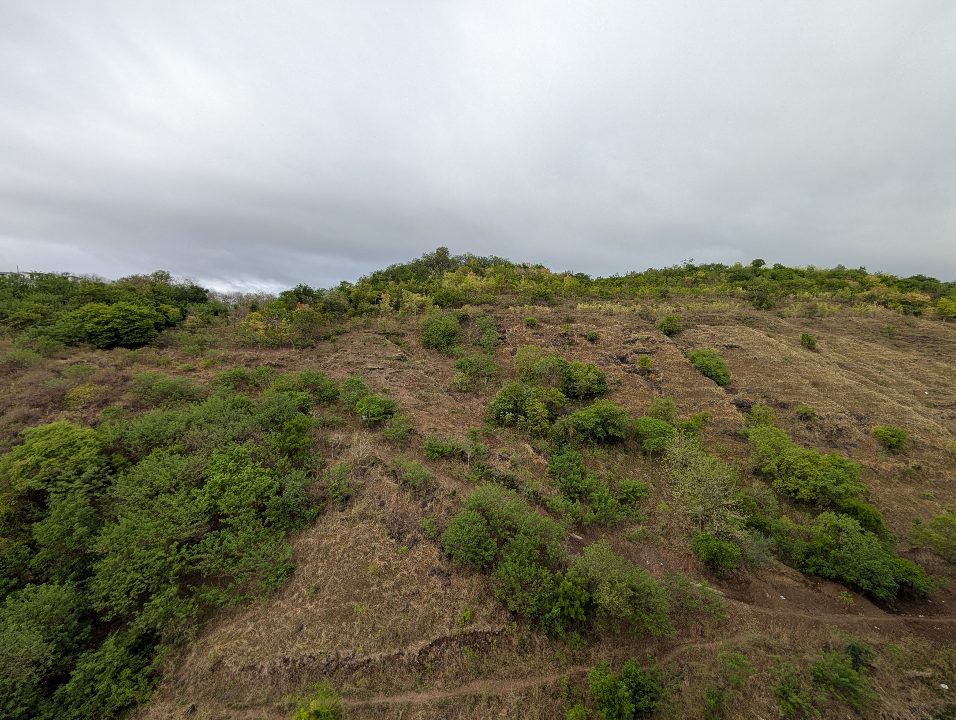
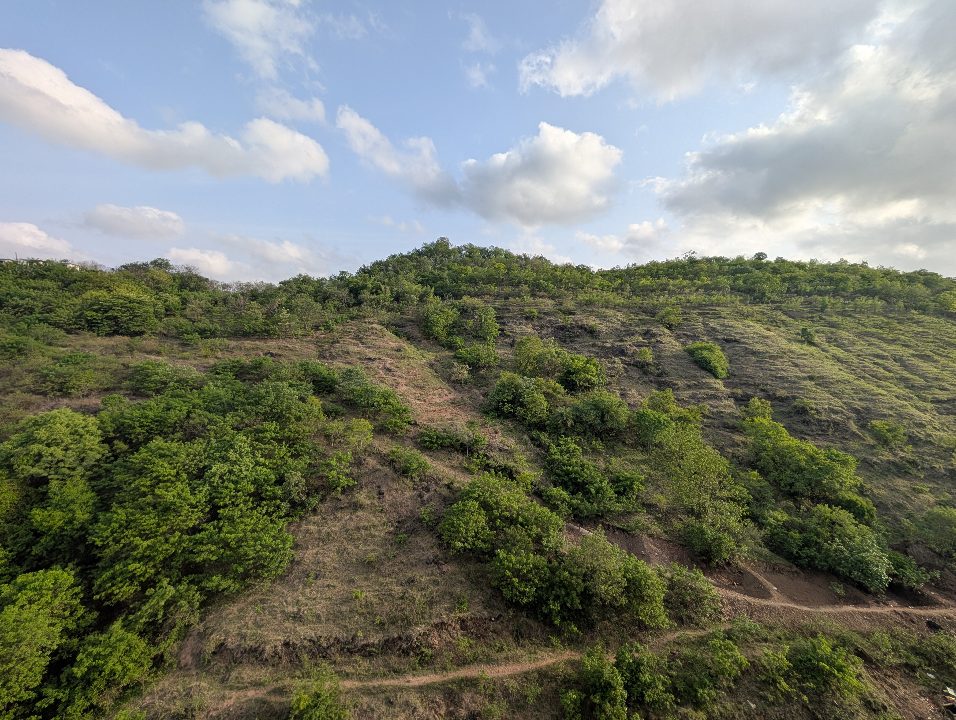
Last weekend, Baner Hill welcomed its newest residents.
This weekend, it was our turn to look after them. Eleven volunteers gathered on a bright morning, with clear skies and a cool breeze making the climb a little easier than usual. Today's work was different. There were no large plantation drives or major milestones. Instead, the morning was dedicated to something equally important, caring for the trees that now depend on us.
One by one, volunteers carried filled water cans up the hill. Together, we watered all 39 saplings that have been planted this monsoon. Each can had to be filled, carried uphill and carefully shared among the young trees. But with many helping hands, what could have been exhausting quickly became enjoyable.
It was another reminder that conservation becomes much easier when it is shared.
Alongside watering, we built one new contour trench and extended two existing trenches, improving the landscape's ability to capture rainwater around the newly planted trees. We also spent time strengthening several planting pits by widening them, giving the saplings a little more space for their roots to establish.
Towards the end of the morning, we tried something new.
Near the small seasonal waterfall, we carefully transplanted three naturally growing Wild Basil (Tulsi) plants, spacing them about two feet apart. The location wasn't chosen by chance. It lies close to the Mother Patch, the mature green island we've been observing over the past few weeks. Perhaps, over time, these small plants will become part of the larger underground ecosystem that already exists there. Only nature knows the answer, but it felt like a hopeful experiment worth trying.
One thing is becoming increasingly clear. Planting trees is exciting. Caring for them is quieter.
There are fewer photographs, fewer celebrations and fewer visible milestones. But these ordinary mornings of watering, checking, repairing and simply showing up are what will determine whether today's saplings become tomorrow's forest.


Satellite NDVI timelapse — 5 years × 6 same-month snapshots — will appear here, powered by Planet Labs imagery, showing how Baner Hill's vegetation has changed season by season.